
Dazaifu, known for being a hub of exchange with the mainland and for the Dazaifu Tenmangu Shrine, where Sugawara no Michizane is enshrined.
I would like to introduce a part of the history of this place, where people have come and gone over a long time and history has been built up.
Please enjoy a journey of exploration that enriches your heart by learning about history and experiencing the culture, allowing you to discover Dazaifu, which you may not have known before.
Intersection of history and culture
Dazaifu
In the Chikuhi region, which has had exchanges with the continent since ancient times, the Dazaifu was established in the late 7th century.
The "To no Chōtei," established as a base for defense and interaction with the continent, gradually transformed into an office governing the entire Kyushu region, becoming a major center for politics, culture, and economy, frequented by many nobles and high priests.
After that, this town, which flourished as a temple town centered around the Dazaifu Tenmangu Shrine dedicated to Sugawara no Michizane, has seen many people, from commoners to nobles, come and go over the ages.
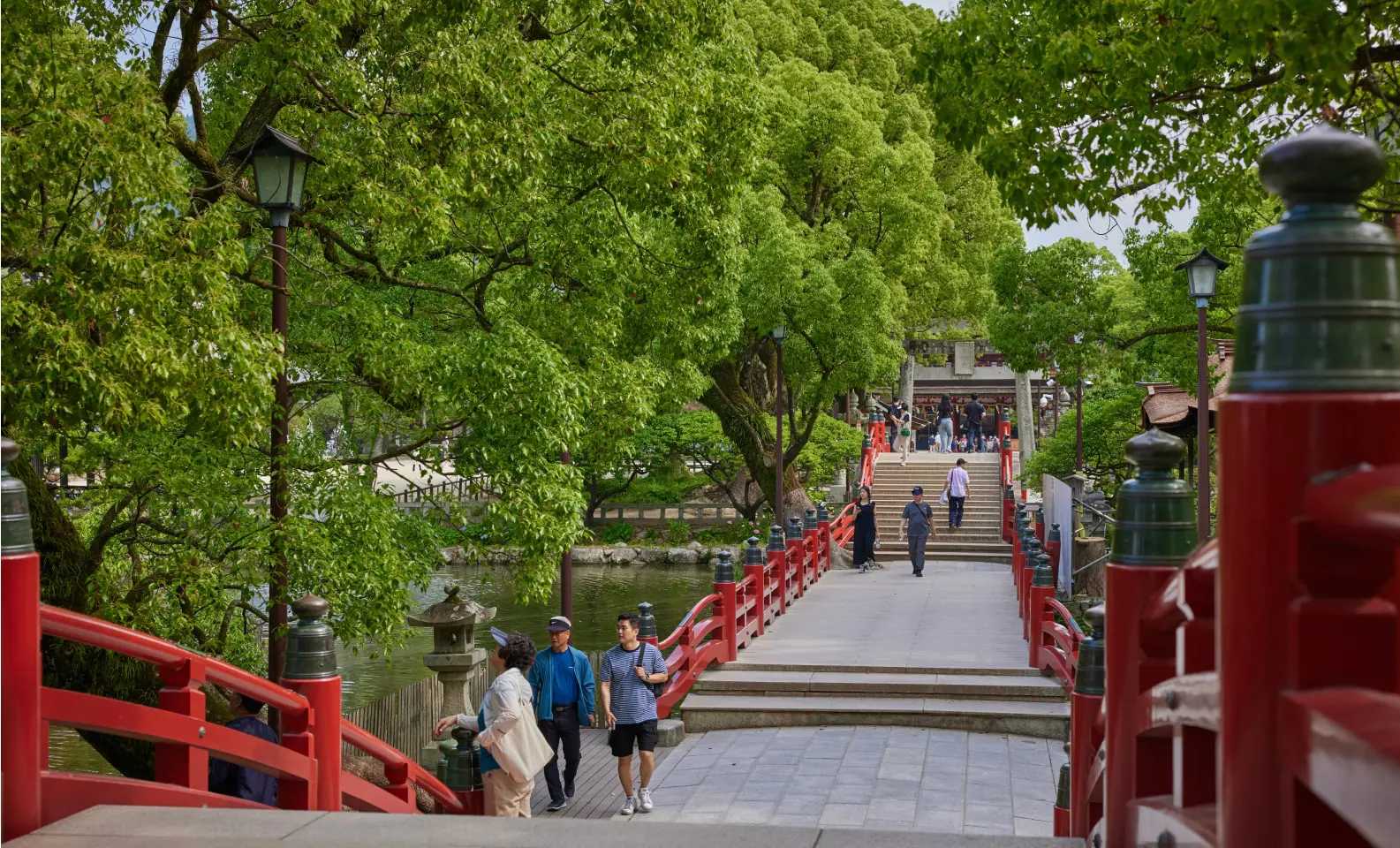
Dazaifu is a tourist city that still attracts over 7 million visitors each year, and it is home to many cultural properties and buildings that reflect the history and culture that have been woven together, not just the Dazaifu Tenmangu Shrine.
Gateway from the continent
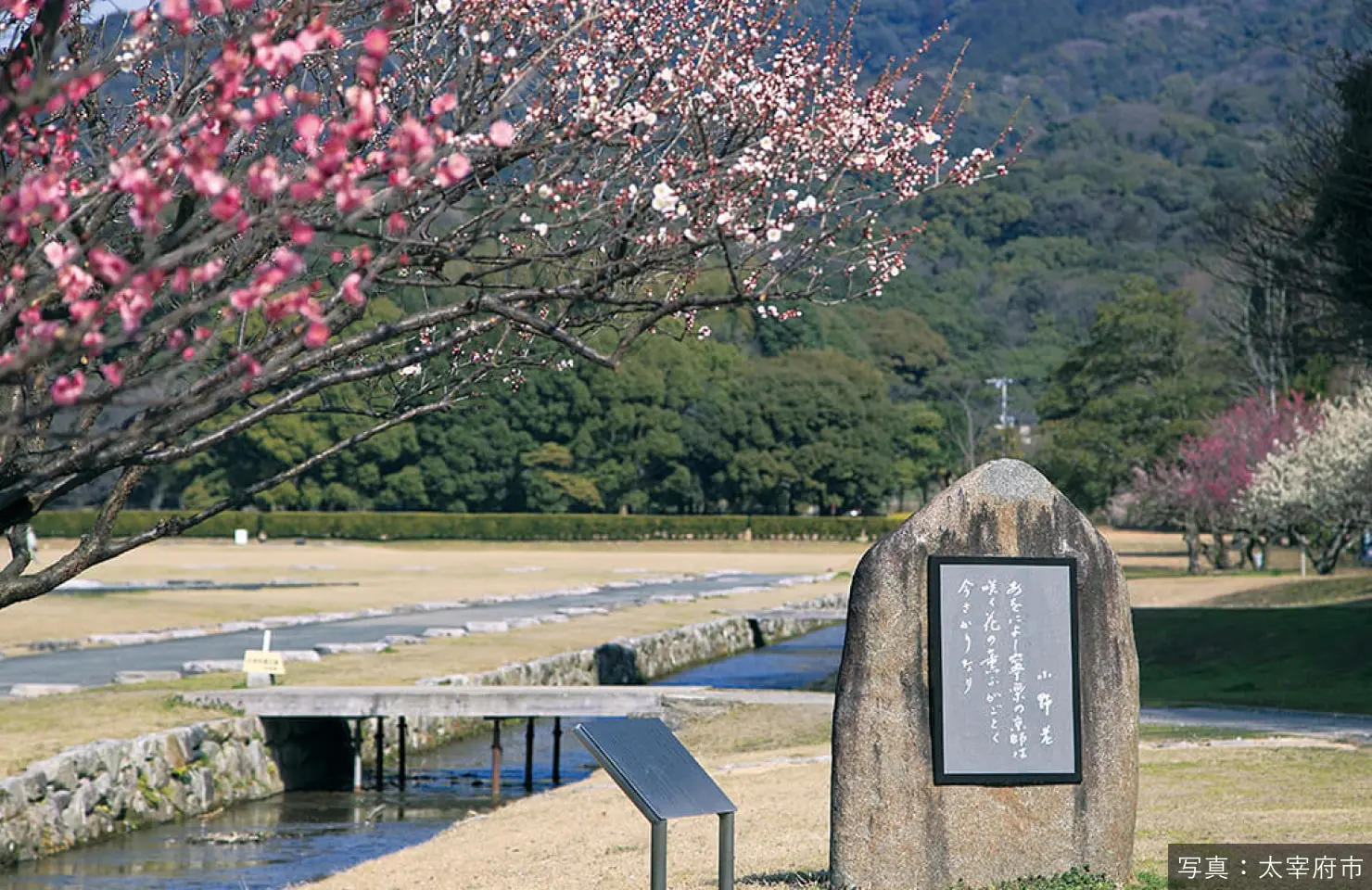
Dazaifu, which has long been open to Asian countries, served as a hub for exchanges with West Asia and Europe. It played a crucial role in quickly introducing cutting-edge technologies, cultures, and ideas that arrived from the continent, spreading them throughout various regions of Japan. Dazaifu is truly the gateway to Japan.
One of the items brought back by the Japanese envoys to Tang China was the 'plum,' which is essential for discussing the history of Dazaifu. The 'Plum Blossom Feast' in the Man'yōshū is a poem celebrating the beauty of the imported plum blossoms and is also famous as the origin of 'Reiwa.'
Sugawara no Michizane and Dazaifu Tenmangu
Dazaifu is also famous as the place where Sugawara no Michizane was exiled for a crime he did not commit.
Sugawara no Michizane was an excellent scholar and politician, and he became a cornerstone of national culture through the abolition of the envoy to Tang China. However, he was brought down by those who did not look favorably upon his rise, and he died in this place two years later.
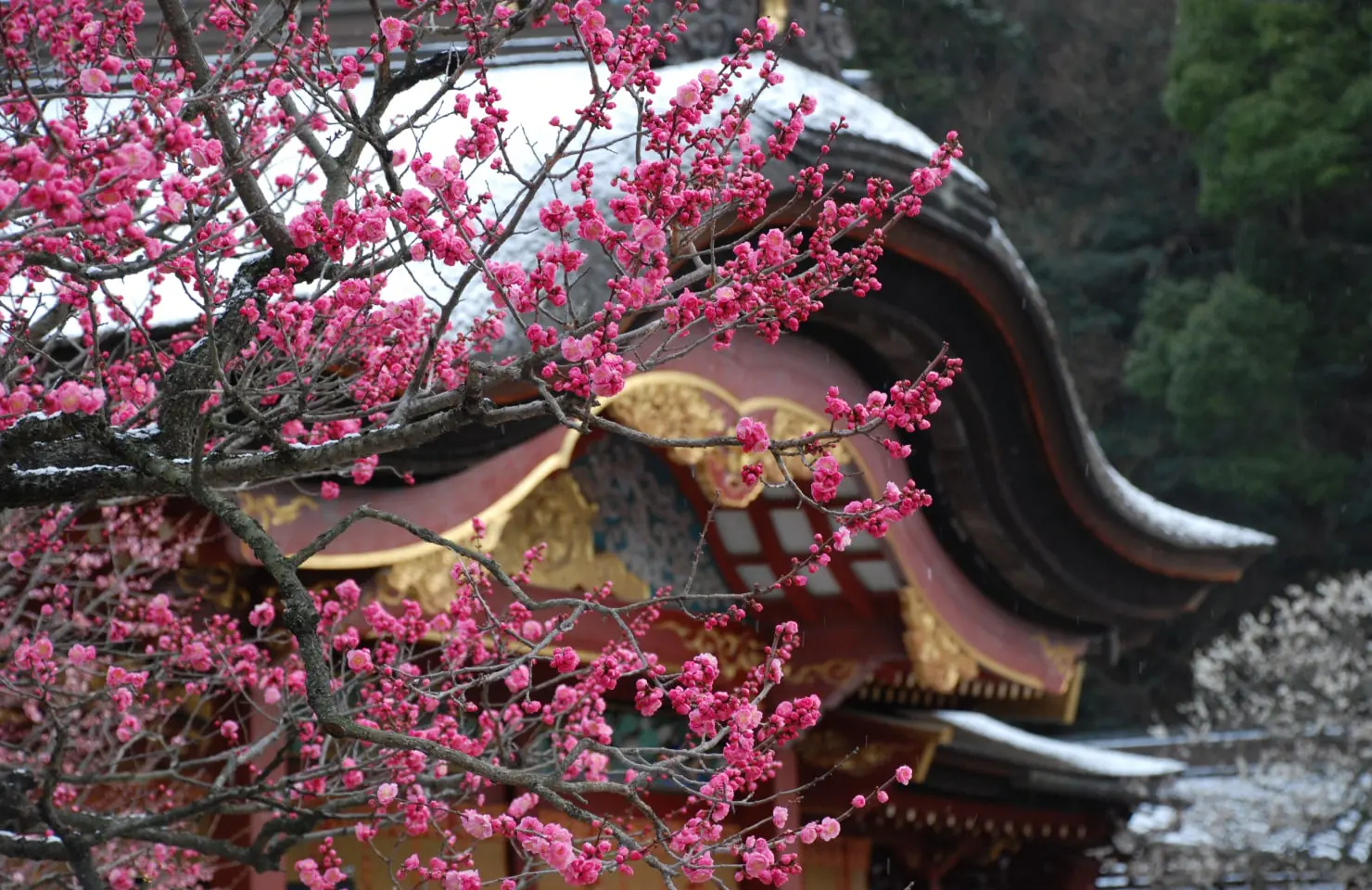
As a result, misfortunes began to befall those who had forced him into a demotion, and this was feared as the 'curse of Michizane.' The Dazaifu Tenmangu shrine was built on his burial site to pacify this curse by enshrining Michizane.
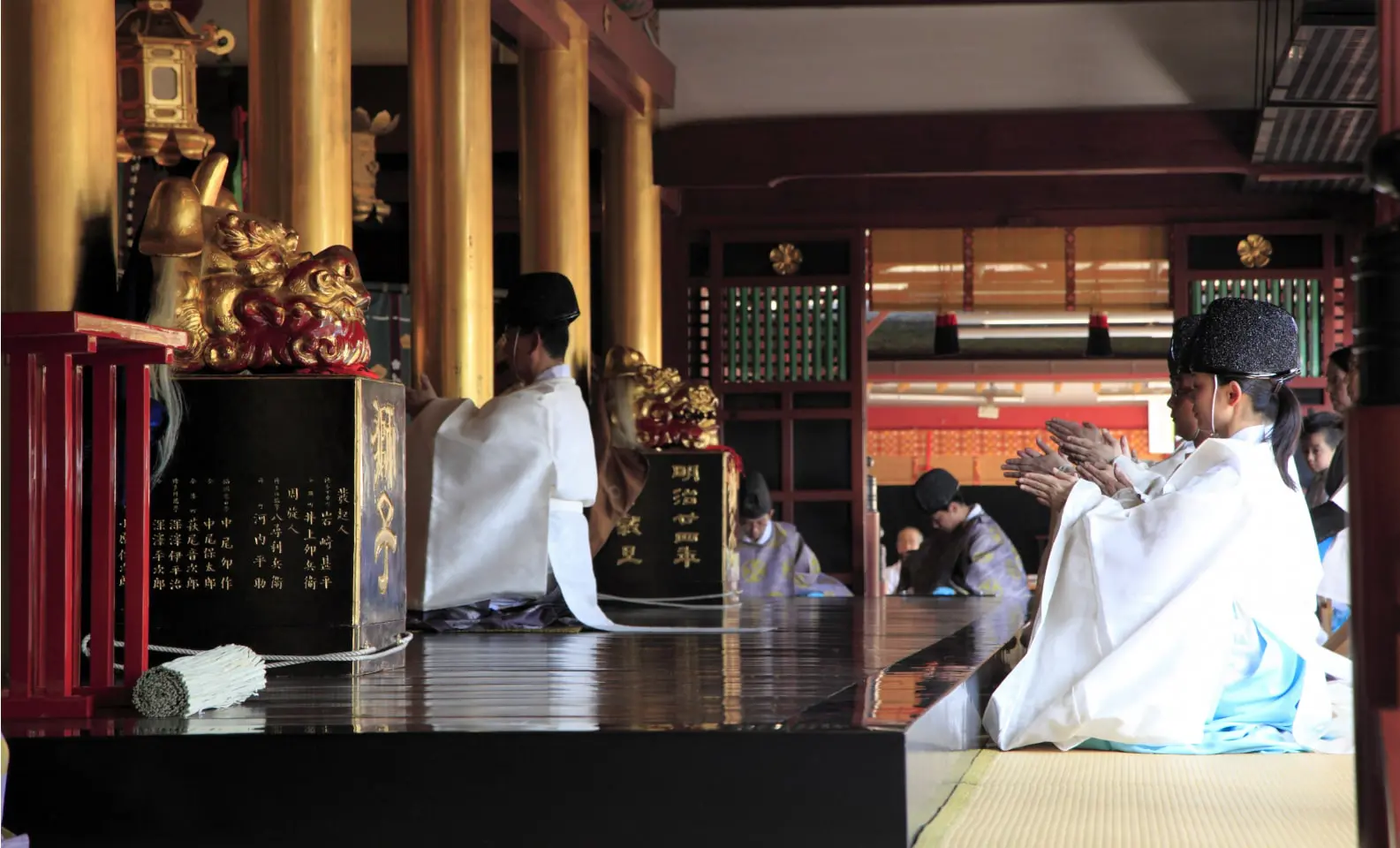
Since then, Michizane has been revered as the god of scholarship, the god of culture and arts, and the god of protection from misfortune, and the Dazaifu Tenmangu shrine has continued to be a spiritual refuge for many people as a sacred site of Tenjin worship.
The "Hibai" tree, which stands right next to the main shrine, is said to have flown to this place overnight in pursuit of the exiled Michizane, and is revered as the sacred tree of the Dazaifu Tenmangu Shrine.
Development and prosperity of the temple town
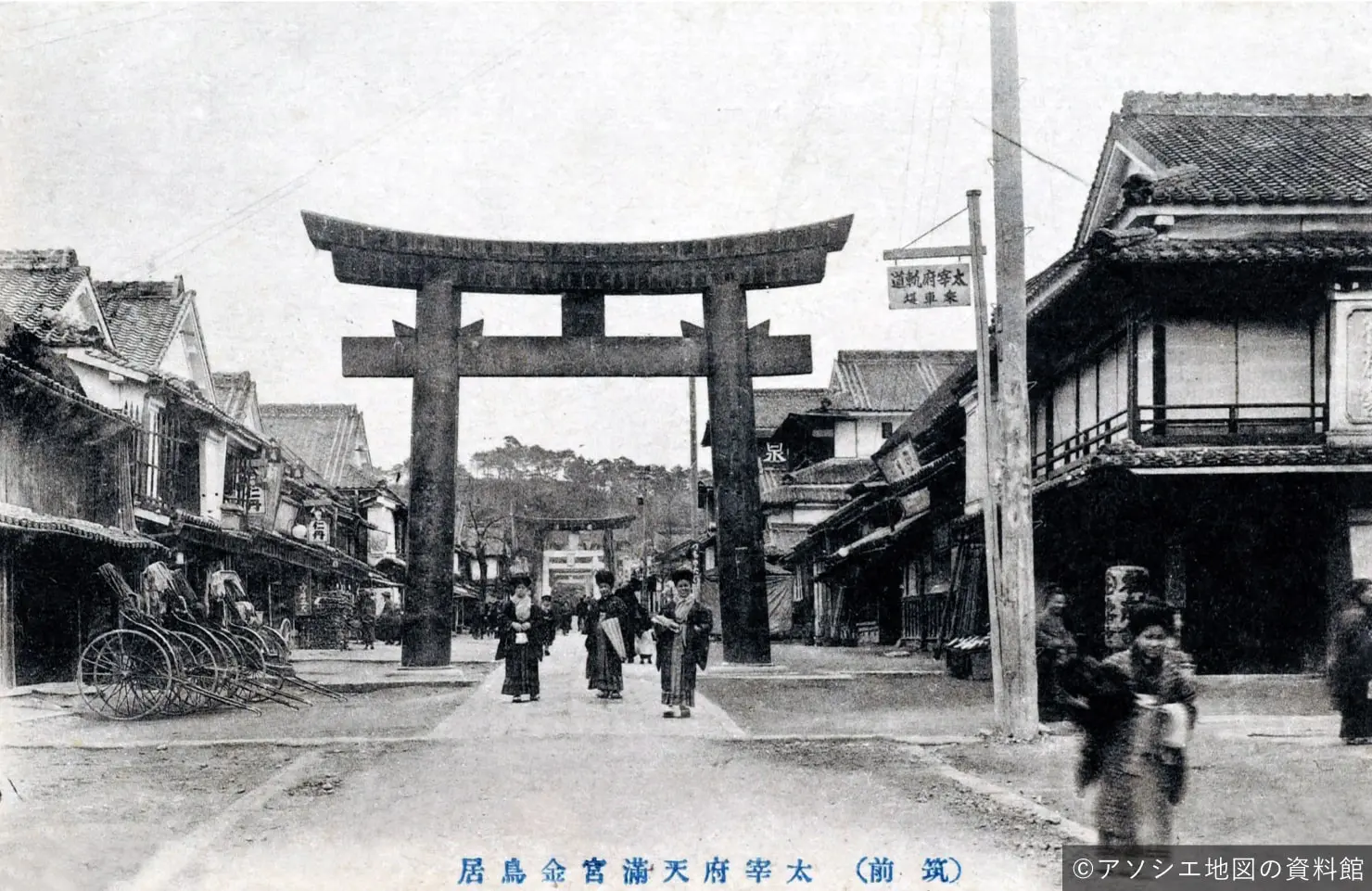
Since then, the town of Dazaifu has been formed around the Tenmangu Shrine. During the Edo period, the trend of common people visiting Dazaifu Tenmangu for pilgrimages, known as 'Saifu Mairi', became popular. In the late Edo period, the approach to the shrine became lively with many inns due to the visits of the Five Lords and samurai from various domains.
During the Meiji era, the 'Sugawara no Michizane's 1000th Memorial Festival' prompted the opening of the current Nishitetsu Dazaifu Line as a horse-drawn railway, leading to an increase in souvenir shops, restaurants, and stores along the approach. The history and culture that have been woven together continue to thrive in the town.
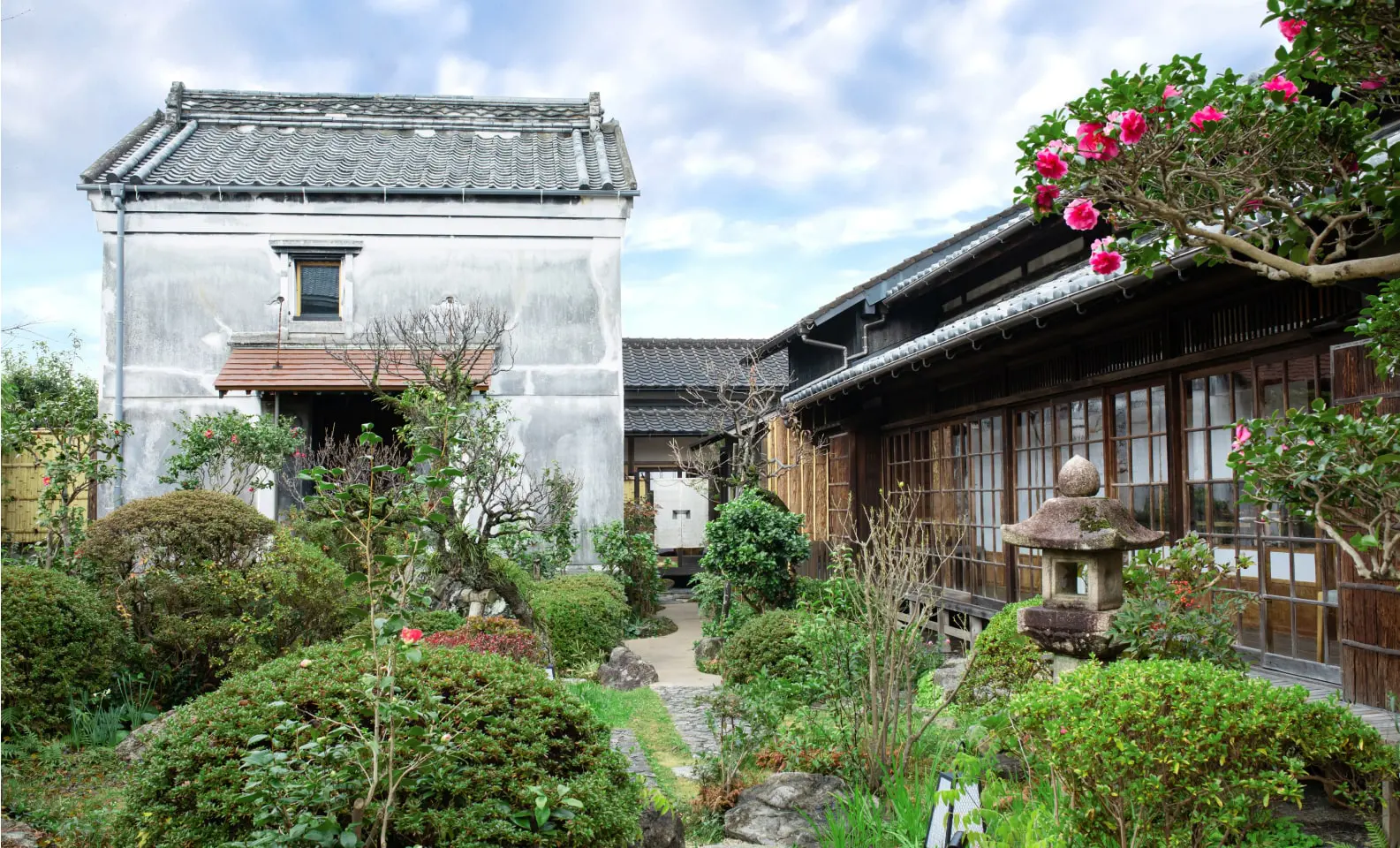
The torii gates and signposts evoke the path of the former pilgrimage, and along the approach, there are lodgings where Sakamoto Ryoma and Saigo Takamori stayed during their travels in the tumultuous Bakumatsu period, giving a sense of that turbulent era.
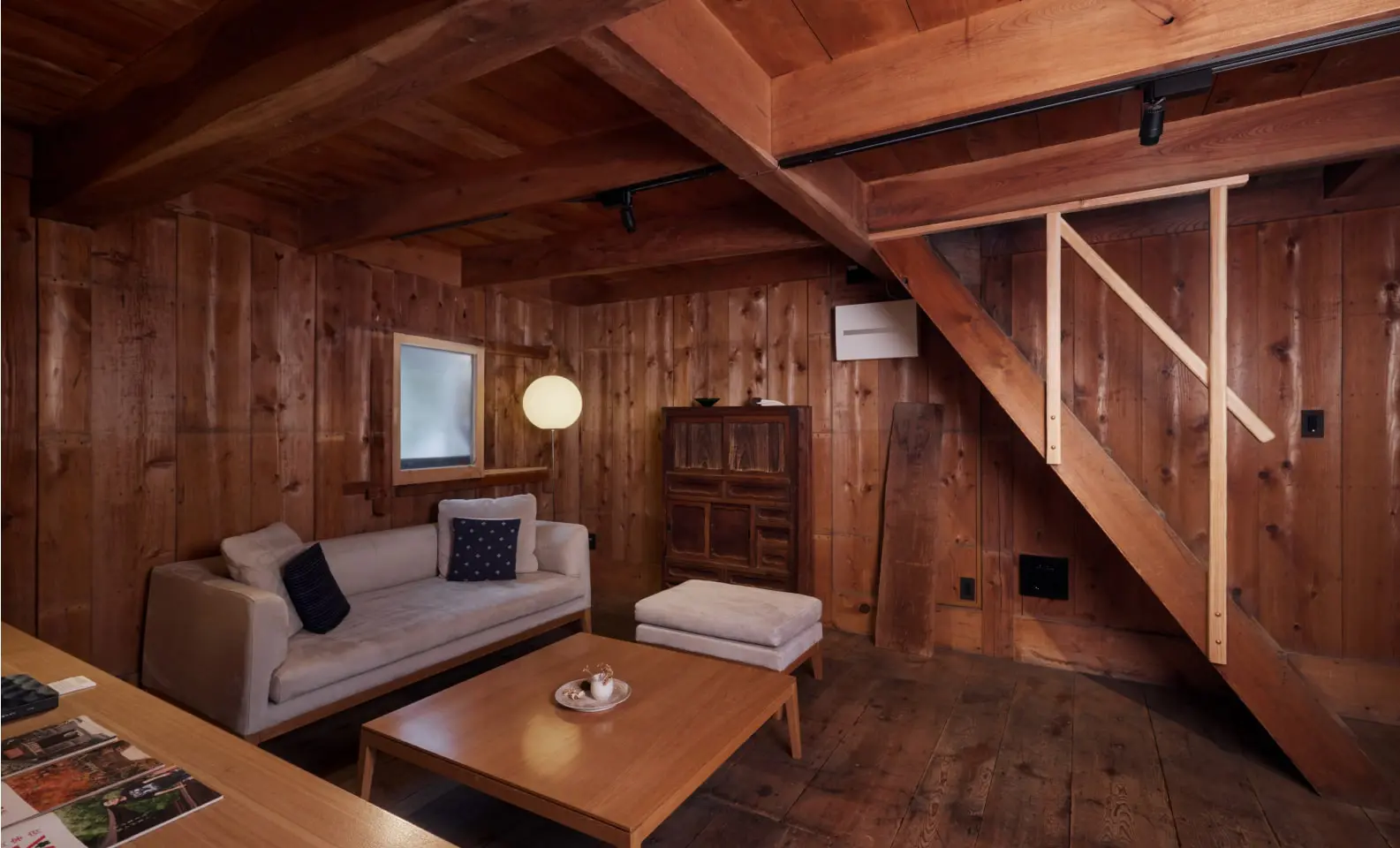
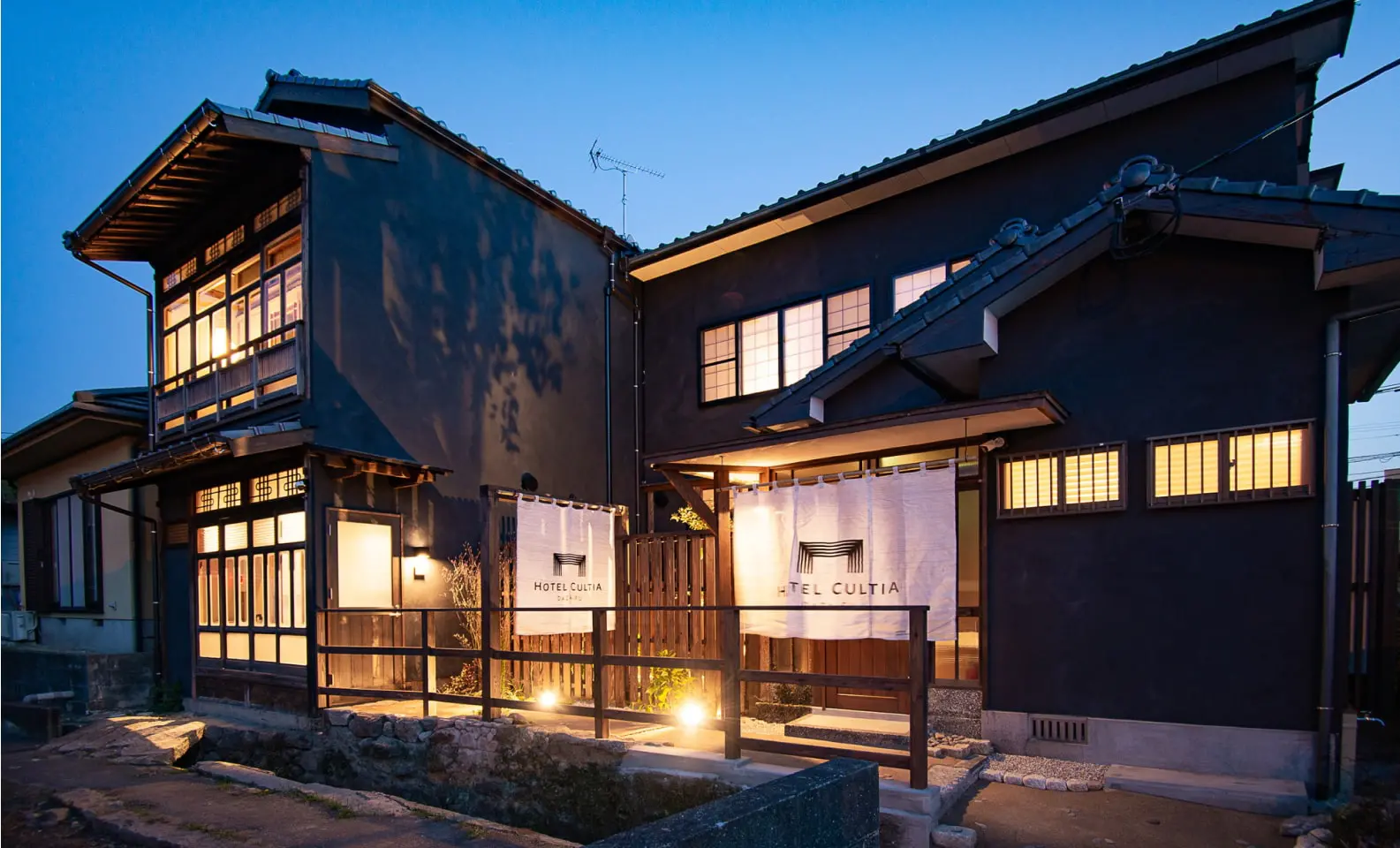
Once a beloved ryotei in the town, this hotel was also a fish shop that supplied ingredients to Tenmangu Shrine, and it remains one of the places that preserves the lively atmosphere of the approach.