
About an hour's drive south from Fukuoka Airport, Yame-Fukushima, located at the edge of the Chikugo Plain, retains a strong resemblance to its past as a commercial city. Behind the town lined with heavy white walls, a gentle slope of tea gardens extends over approximately 70 hectares.
Kazeno Yame-Fukushima is a hotel with guest rooms scattered throughout this historical town.
Memory of 400 years of livelihood, the architectural beauty of white walls
"Kazeno Yame-Fukushima," located in Yame City, Fukuoka Prefecture, is a hotel that has preserved and revitalized merchant houses of wealthy merchants that flourished as one of Kyushu's leading commercial cities from the Edo period to the early Showa period, as well as those that have faithfully upheld the culture of tea.
A row of heavy earthen storehouses known as "igurazukuri" with white walls. Inside the buildings, you can find earthen walls that bear the marks of craftsmen and beams that have developed a deep luster over many years. The delicate lattice work and intricately designed wooden frameworks represent the prosperity of the time and the pride of the artisans, quietly conveying the dignity that still flows through this place.

The wealth of Chikugo Plain,
and the winds of the large tea garden intersect in this location
The area where Kazeno Yame-Fukushima is located is an Important Preservation Districts for Groups of Traditional Buildings, possessing extremely high historical and scenic value. Approximately 150 merchant houses from the Edo to the Taisho periods still exist, making it a 'living historical stage' where activities continue to this day.
This area has developed as a hub for the rich agricultural products of the Chikugo Plain and specialty goods from the mountainous regions since ancient times. To the east of the town lies the 'Yame Central Grand Tea Plantation', where a refreshing breeze flows through the vast tea fields.
Walking through the white-walled alley, the sounds of craftsmen's tools resonate from the workshops of altars and lanterns, and in the evening, the soft light of Yame lanterns illuminates the eaves. With each step, one can feel the beauty of the craftsmanship that this land has preserved and the breath of the earth.

Historical background of the building
The core of Kazeno Yame-Fukushima consists of two historical residences that symbolize the prosperity of Yame.
Gathering the essence of brewing "Kyukitaya"
The former residence of the sake brewery "Kitaya," which has been in operation since the Edo period. This building, which was once the center of brewing and commerce, features the particularly robust "Igura Zukuri" style, which is especially prominent in Yame-Fukushima. The vast dirt floor and the high-status tatami rooms retain the vibrancy of the time when it was renowned as one of Kyushu's leading commercial cities, as well as the high cultural education fostered by the merchants. The architectural value is evident, and the strong spirit that supported the commercial city of Yame is alive in every detail of the building.
"Old Otsubo Tea Shop" faithfully preserves the culture of tea
Founded during the Edo period, 'Otsubo Chaho' has continued the tea business for generations. The delicate latticework that blends into the townscape and the serene space nurtured by tea culture warmly welcomes visitors. The area, which has been transformed into guest rooms, also includes a 'storehouse' that once carefully protected valuable products. Here, one can physically feel the memories of a solid merchant's life, and spending time within this cultural heritage, a 'living history,' brings a profound sense of peace that transcends time.
Architecture crafted by craftsmanship and local culture
The space of Kazeno Yame-Fukushima is shaped by natural materials polished over time and the exquisite craftsmanship left by the master artisans of the era. The Japanese aesthetic, which values the texture of the materials themselves and the changing light, breathes life into every corner of the building, eschewing extravagant decorations.
Yame's design, lattice and the interplay of light and shadow
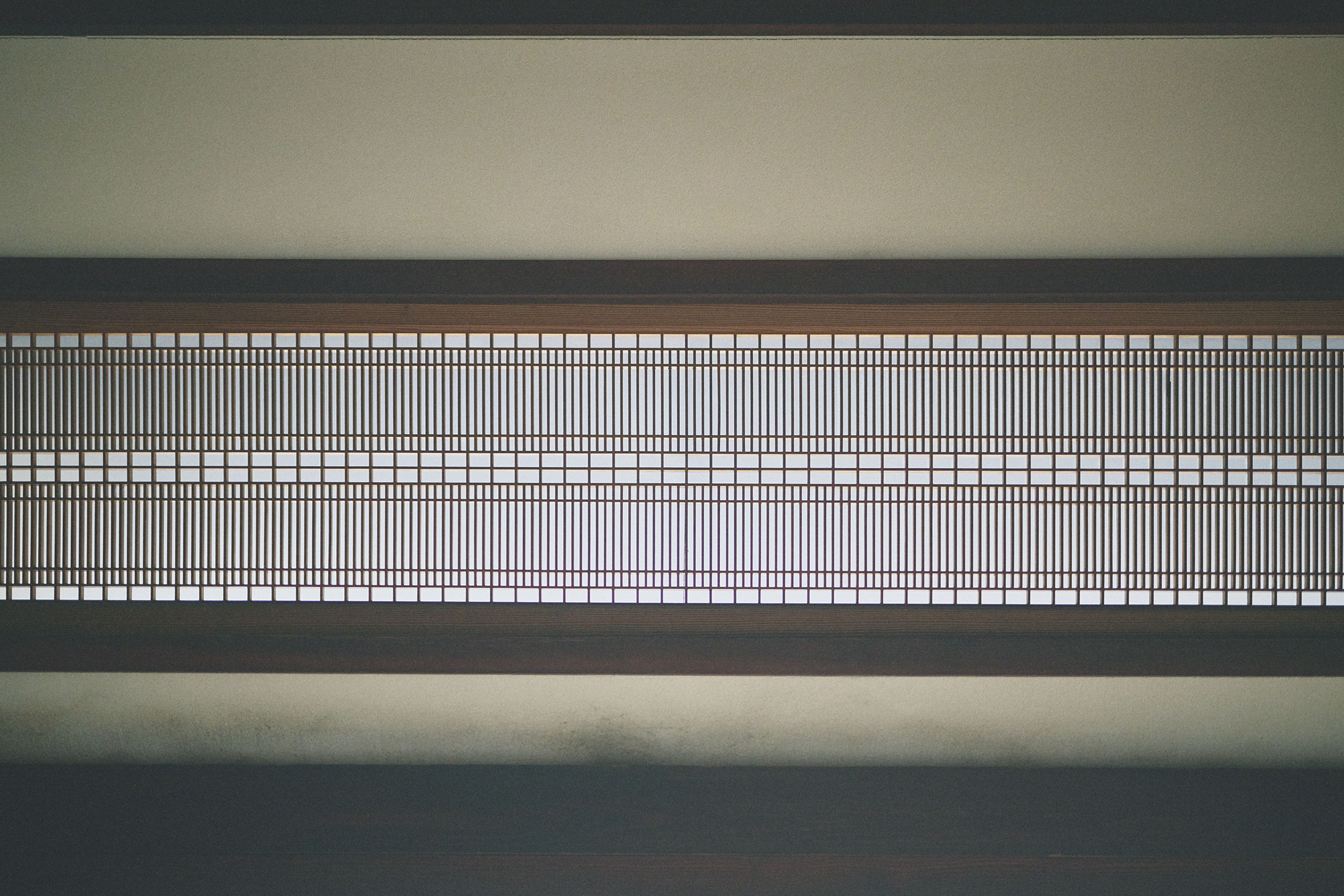
The delicate latticework applied to the guest rooms and common areas is a design born from the wisdom of protecting the privacy of merchants while allowing light and wind to pass through. The light, which changes with the seasons and times of day, creates regular patterns of shadow and light as it filters through this lattice. From the soft morning light that streams through the shoji to the deep shadows that fall in the evening, enjoy a rich moment unique to cultural heritage architecture, surrounded by the ever-changing contrasts.
The texture of the material speaks, Kurume Kasuri and Yame Washi
The earthen walls bearing the marks of artisans and the sturdy pine beams that support the space are complemented by materials nurtured in the Yame area. The unique texture of Kurume Kasuri and the soft feel of handmade washi paper are present indoors. In this space, where the designs of master craftsmen come to life, one can experience the rich texture that embodies the fusion of local crafts and architecture.
The deep green wind and the memory of handwork
Leaving behind the everyday, I surrender myself to the time that has been etched by the town of Yame-Fukushima.
The expansive deep green of the vast tea plantation and the sense of openness it provides, along with the white-walled town where artisans' craftsmanship and way of life still thrive, create a healthy rhythm that embodies a dignified atmosphere unique to this place.
We have prepared a moment to open your heart to the winds of Yame and deeply savor the context of this land.
Experience a stay that touches the essence of Yame-Fukushima, which you cannot encounter in your usual travels.
